Stablecoin payments are a gateway to asset-backed spending
Originally published in The  Collateral on LinkedIn.
The most interesting thing about stablecoin payments is not that someone can buy a coffee with a digital dollar. It is that the connection between holding digital assets and paying for ordinary life is becoming more practical.
For a customer, the experience might still be a card, a phone, and a familiar checkout. Behind that purchase, the source of funds and the way institutions settle with one another can be different.
I see this as the foundation for another development: spending power created through borrowing against assets held on-chain.
Stablecoins help answer how digital value reaches commerce. Asset-backed credit can address a different question: how someone accesses that spending power while retaining an asset they want to own.
The payment connection is already growing
Artemis estimated that monthly crypto-card volume grew from approximately $100 million in early 2023 to more than $1.5 billion by late 2025. That category includes spending funded by stablecoins and other cryptocurrencies, not stablecoins alone.
The institutional infrastructure is developing too. On April 29, 2026, Visa reported that its stablecoin settlement pilot had reached a $7 billion annualized run rate. That is a measure of settlement activity expressed at an annual pace, not $7 billion of completed annual consumer purchases.
These are different measures, but together they show activity on both sides of the payment relationship: products connecting digital balances to purchases, and institutions incorporating stablecoins into settlement.
Importantly, this does not require every merchant to accept a token directly. Artemis describes conventional fiat settlement as the dominant model for crypto cards, with conversion happening behind the scenes.
That is a useful lesson for builders. A new financial system does not have to begin by asking everyone to change how they shop.
From spending a balance to borrowing against an asset
Spending an existing stablecoin balance is one model. Using an asset as collateral to obtain spendable funds is another.
Consider someone who holds Bitcoin for the long term but needs dollars for a planned expense. Converting Bitcoin into spending money reduces the holding. Borrowing against it creates a different trade-off: the person retains exposure to the asset but takes on debt and puts collateral at risk.
On-chain lending already provides a mechanism for obtaining liquidity against supplied collateral. Aave, for example, documents borrowing through smart contracts, with collateral requirements and liquidation conditions.
The development I find compelling is connecting that borrowing to an ordinary payment experience.
One possible structure is:
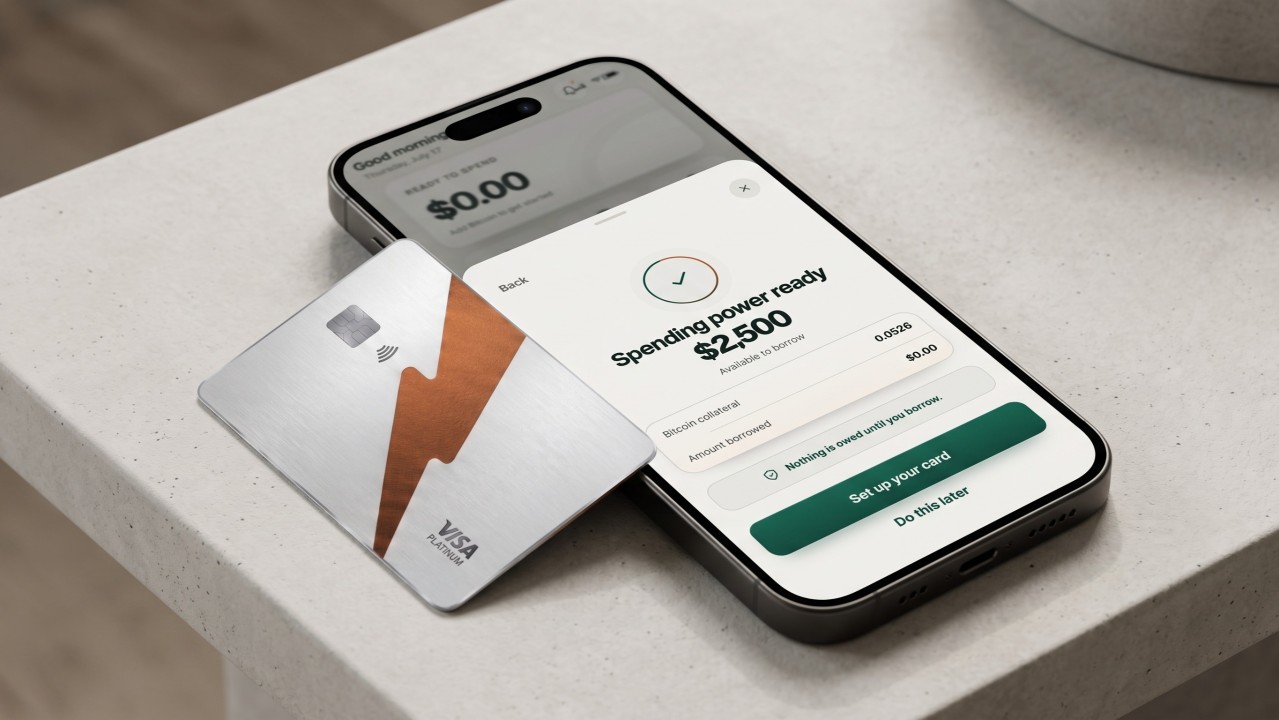
Bitcoin collateral → on-chain borrowing → stablecoin liquidity → card spending.
Here, “asset-backed spending” refers to the borrower pledging an asset to support credit. It is separate from the reserves that may back the stablecoin itself.
The stablecoin serves the spending side. The collateral supports the borrowing. The card connects the resulting liquidity to commerce.
That is a different proposition from simply making it easier to sell crypto at checkout.
On-chain credit should not mean more work for the user
The existence of lending protocols and payment cards does not automatically create a usable product.
A person should not have to become an expert in wallets, collateral transfers, borrowing transactions, and card funding just to pay for something. The services need to work together, and the customer needs to understand the financial result.
The experience I want to see makes the important information clear: what is pledged, what has been borrowed, what it costs, and what repayment requires.
Spend-triggered borrowing is a logical direction for that experience. Instead of arranging a separate loan and then working out how to spend it, a purchase could initiate the borrowing needed to support the payment, within previously agreed limits and conditions.
Delivering that requires careful coordination. A card authorization and an on-chain transaction should not be casually presented as the same event. Blockchain confirmations, payment settlement, refunds, and repayment all need to reconcile correctly.
The user should experience less operational complexity without losing sight of the debt.
Bitcoin for ownership, stablecoins for spending
I do not see stablecoins and Bitcoin as competing answers to the same question in this model.
A person may choose Bitcoin as a long-term holding while wanting spending and repayment expressed in dollars. Stablecoin liquidity can help connect those preferences, provided the borrowing and payment arrangements are suitable.
Non-custodial design is important to that direction, but it must be described precisely. Connecting a wallet does not mean pledged collateral remains freely available. Lending rules still apply, and insufficient collateral can lead to liquidation.
There are also implementation risks. Smart-contract vulnerabilities, price-feed failures, and network or bridge dependencies can affect a lending arrangement. For Bitcoin-backed products, the way Bitcoin is represented and controlled must be explained rather than hidden behind an “on-chain” label.
Those are requirements for building the product responsibly, not reasons to ignore the opportunity.
The next step has to improve the borrower’s position
Stablecoin payment growth does not prove that every user wants a loan. Spending an existing dollar balance will remain the right choice for many people.
But for asset holders with real expenses and a credible repayment plan, the connection is logical. Once digital value can reach everyday commerce, credit can be built around the assets people already own.
At BCS, that is the direction we are building toward: a non-custodial card experience connecting decentralized lending with spend-triggered borrowing, without forcing users to piece together separate services.
The measure of success should be more than transaction volume. Easier access to borrowing is only useful if people understand the cost, manage their obligations, and protect their ability to keep building assets. That is why repayment and financial discipline belong in the product’s design.
I believe stablecoins are establishing a practical route into everyday payments. The next opportunity is to connect that route to on-chain collateral and credit that supports ownership.
The ambition is to make what people own more useful in their financial lives, without confusing the ability to borrow more with becoming wealthier.
BCS is in development. This article presents a founder’s thesis, not a prediction of inevitable adoption or a recommendation to borrow.