A store of value should give you more choices
Originally published in The  Collateral on LinkedIn.
You can believe in Bitcoin for the next decade and still have bills due next week.
That is the tension behind the familiar instruction to buy Bitcoin and put it away. Long-term ownership matters. But so does being able to pay for life without constantly undoing the position you are trying to build.
A store of value is meant to preserve purchasing power over time. Putting something away is one way to protect it. It is not the entire purpose of owning it.
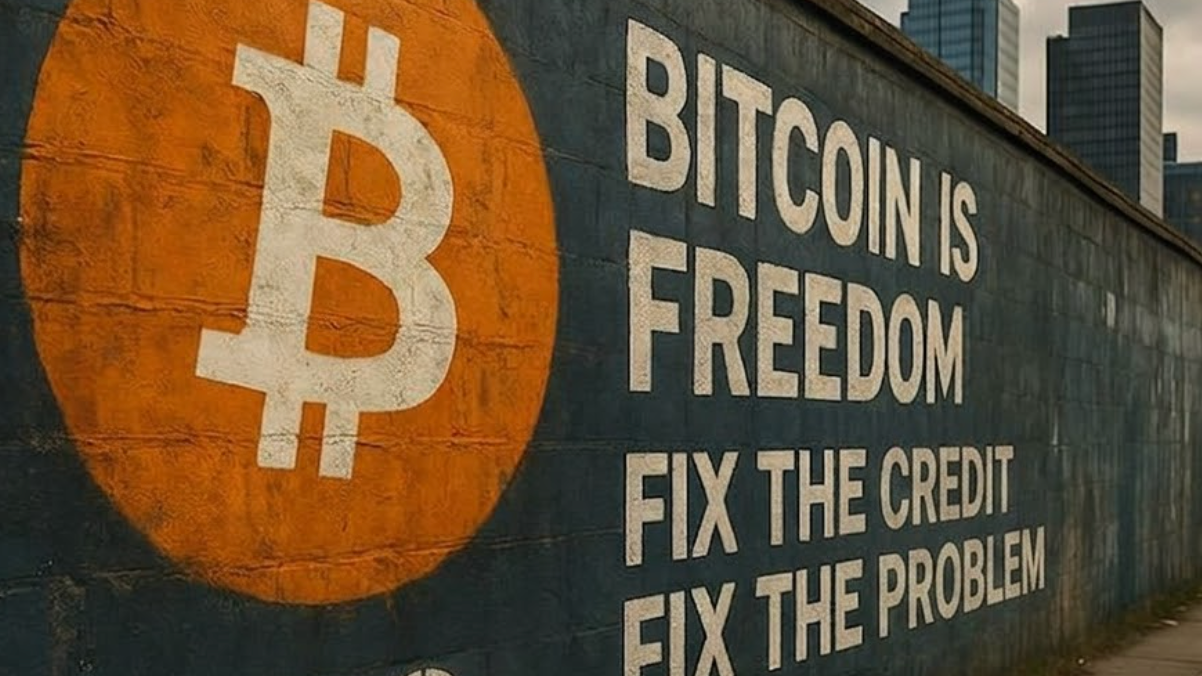
To me, ownership should eventually create more choices: the ability to wait, to fund a necessary expense, or to make a decision without starting from zero. That is why I think the conversation about Bitcoin needs to include how we borrow, not just how we save.
When credit starts competing with ownership
Unsecured credit lets people borrow without pledging a specific asset. That can be useful. Having access to credit before accumulating substantial savings is part of its appeal.
The problem is what happens when carrying a balance becomes a permanent part of someone’s finances.
In the second quarter of 2026, the Federal Reserve reported an annualized rate of 22.15% for commercial-bank credit-card accounts assessed interest. That figure concerns accounts carrying finance charges, not every cardholder.
For someone trying to build assets while carrying expensive debt, interest competes directly with saving. Part of the money that could have strengthened their financial position goes toward servicing past spending instead.
I do not think the answer is to condemn every credit card or tell everyone to borrow against their assets. Someone without assets cannot simply switch to asset-backed credit. And for someone already under pressure, adding another loan may make the situation worse.
But expensive unsecured borrowing gives people who do own assets a reason to ask a different question: could those assets support access to credit on terms that make sense for their circumstances?
That is a more useful conversation than treating a larger unsecured limit as the only sign of financial progress.
Borrowing against ownership changes the trade-off
Asset-backed borrowing is not a new invention. Securities-backed lines of credit already allow investors to borrow against holdings in an investment account rather than sell them immediately.
The attraction is understandable. A person may want to retain an asset while addressing a shorter-term need for cash.
But the word “secured” needs to be understood correctly. It describes the lender’s claim on collateral. It does not mean the borrower is safe. The SEC and FINRA warn that securities-backed borrowing can ultimately force investors to sell holdings they intended to keep.
Borrowing also does not turn an asset into free spending money. The funds arrive with a repayment obligation. If the only repayment plan is that the asset will rise in price, the borrower is depending on a market outcome they cannot control.
The version of asset-backed credit I want to build around has two foundations: something the person owns and a credible ability to repay. Neither should substitute for the other.
Bitcoin’s case as pristine collateral
This is where I see Bitcoin’s potential as pristine collateral.
I use that phrase to describe its monetary properties, not to suggest that its price or a loan backed by it is risk-free.
Under its current consensus rules, Bitcoin has a supply ceiling of 21 million. It is divisible into small units, and its public ledger lets participants verify transactions without relying on a central issuer’s private accounting.
Those properties make it a compelling candidate for collateral in my view. They offer a basis for credit built around a verifiable asset rather than only a conventional credit file.
Scarcity, however, is not price stability. Bitcoin’s value can fall sharply. When the value of pledged collateral falls far enough, a lending arrangement can liquidate it to cover the debt. Decentralized lending protocols explicitly include such liquidation mechanisms.
A strong conviction about Bitcoin’s long-term future does not protect a borrower from a short-term collateral shortfall.
Non-custodial borrowing must preserve clarity
How borrowing happens matters as much as what backs it.
Non-custodial lending protocols offer a way to interact through a wallet and smart contracts rather than place the entire relationship inside a custodian’s internal system. That direction matters to me because control is part of the reason to own Bitcoin in the first place.
But control of a wallet is not the same as unrestricted control of pledged collateral. Collateral remains subject to the lending rules and can be liquidated. Smart-contract vulnerabilities, price-feed failures, and network or bridge dependencies can introduce risks of their own.
“Non-custodial” should explain a system’s structure, not replace an explanation of its risks.
At BCS, we are building toward a non-custodial card experience that connects decentralized lending with everyday payments. The goal is borrowing triggered by card spending, without asking users to piece together separate services. Making that experience simpler must not make the borrowing obligation harder to see.
Discipline is what makes spending power useful
The opportunity is bigger than making it easier to borrow.
A higher credit limit is not the same thing as greater wealth. Borrowing adds a liability. Building assets, keeping spending manageable, and consistently repaying principal are what I want a credit product to encourage.
That is why we are designing BCS around financial wellness and repayment, rather than rewarding transaction volume alone. The product should support the financial position behind the card.
For Bitcoin-backed borrowing, discipline means having a repayment source beyond hoped-for price appreciation, understanding the collateral terms, and leaving room for conditions to worsen. Sometimes the disciplined decision will be to borrow less, sell a portion of an asset, or postpone a purchase.
Bitcoin’s potential as pristine collateral and the possibilities of non-custodial borrowing deserve attention. But neither removes the need for judgment. Without repayment discipline, easier borrowing can put long-term ownership at risk.
The goal is to build wealth and useful spending power together: to own more over time, keep obligations manageable, and have more choices when life requires them.
BCS is in development. This article presents a founder’s perspective, not a recommendation to buy Bitcoin or take out a loan.